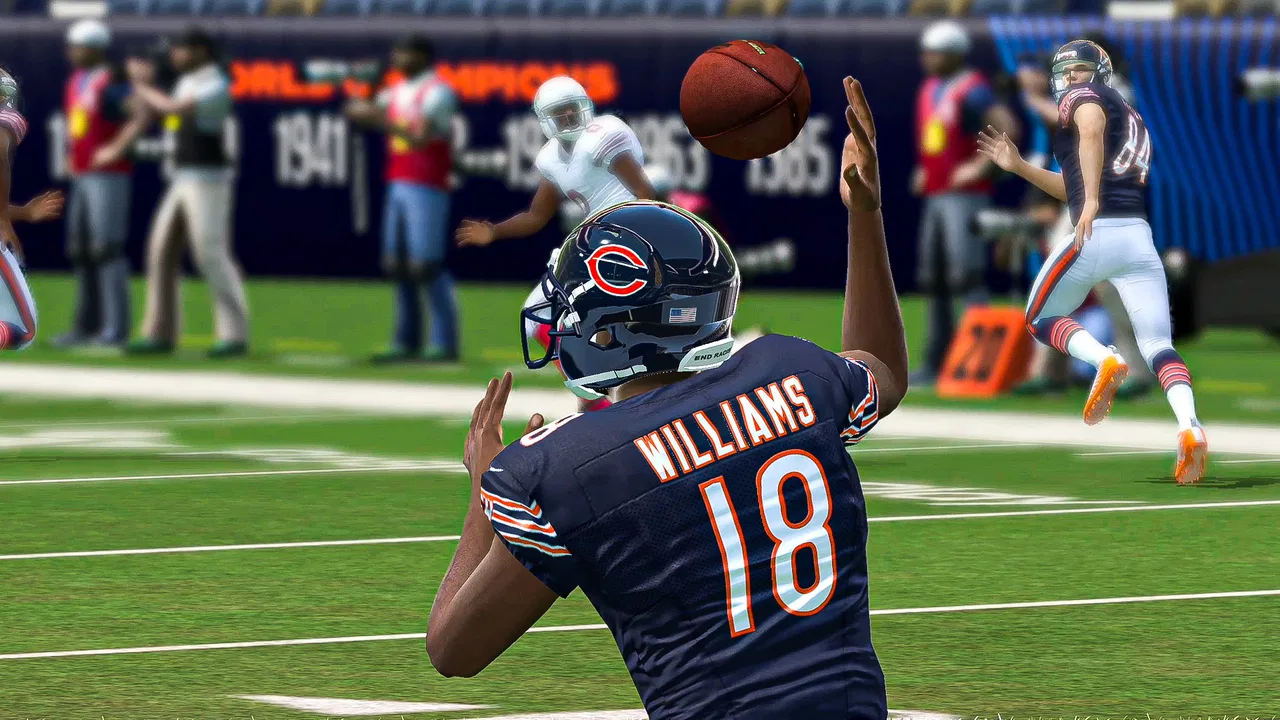
Madden NFL 26 Mobile Football
- 4.5
- Rating
- 10.00M
- Installs
- Free
- Price

 Analysis by App-foxy
I spent time with Madden NFL 26 Mobile Football as a sports game built around the fantasy of creating, managing, and coaching an NFL team from a phone. That focus matters: this is not simply a quick arcade football game where every session is about controlling a player for a few minutes. It asks me to think about the team as a project, make choices around improvement, and return when I want to push that project further.
Developed by ELECTRONIC ARTS, the game is free to download and aimed at Everyone. It runs on Android devices using version 5.0 or later, which makes it accessible to a broad range of phones and tablets. The current version is 12.0.8, and the game has built a substantial audience, with over 10 million installs, a 4.4 average from around 248 thousand ratings, and roughly 81 thousand written reviews. Those figures suggest a well-established mobile sports title, but they do not remove the need to ask whether its particular style suits the way you like to play.
How Madden NFL 26 Mobile Football Turns an NFL Fantasy into a Routine
I approach Madden NFL 26 Mobile Football as more than a quick football diversion: its appeal comes from giving a phone session a longer purpose. In this section, I look at how that team-building routine can fit around shared devices and ordinary household schedules, then turn to the practical boundaries that help keep playing comfortable for everyone.
You May Also Like

 Google Keep - Notes and lists
Google Keep’s Quiet Growth Shows the Appeal of Simpler Notes
As mobile work gets busier, Google Keep keeps winning a simple contest: capture a thought quickly, find it later, and get on with the day.

 Blood Strike: 2.5 Anniversary
Blood Strike’s Loadouts Turn Every Drop Into a Tactical Gamble
A close look at Blood Strike’s custom loadouts: how fast access to signature weapons reshapes its battle royale rhythm, rewards preparation, and narrows the gap between fights.

 Pandora - Music & Podcasts
Pandora’s Music Is Easy to Start, but Harder to Recover
Pandora’s strength is its low-effort path from a seed to a station. Its weak spot is how much confidence it asks you to place in connection, setup, and quiet recovery.

 8 Ball Pool
 Is Built on Rivalries, Rematches, and Routine
A close look at the rivalries, rematches, shared routines, and unanswered safety questions that turn a quick pool match into a persistent mobile community.

 Samsung Music
’s Quiet Strength Is Playing What You Already Own
Its reach comes less from spectacle than from dependable access to a personal library. That simplicity is both the app’s strongest retention engine and its ceiling.

 AccuWeather: Weather Radar
AccuWeather Review: A Quick, Clear Forecast for Everyday Decisions
For everyday plans, the best forecast is the one you can understand quickly. AccuWeather makes rain timing, radar, and local conditions easy to act on, with a few trade-offs.
More From Our News Desk



The first goals are easy to understand, but they are not the whole game
What worked for me at the beginning was how quickly the central purpose became clear. I am not wandering through a complicated menu system without direction; I am working toward a stronger NFL dream team and trying to make better decisions as a coach. That gives the opening sessions a useful sense of purpose. Even when I am only playing for a short time, I know what the larger project is supposed to be.
The early experience is best approached as a learning period rather than a test of expertise. I found it more useful to concentrate on understanding how the game expects me to manage the team than to chase every possible improvement immediately. A new player can easily look at the roster and think only about collecting stronger names, but the more interesting question is how each decision changes the way the team feels to manage. That is where the coaching angle separates the game from a basic tap-to-play football title.
My practical advice is to choose one clear short-term objective before opening a session. That might mean focusing on improving the team, completing the activity currently in front of me, or simply learning how a particular part of the football experience works. Without a small target, the menus and rewards can make progress feel less personal. With one, even a brief visit feels like a step in a larger season.
This structure is especially suitable for fans who enjoy the idea of building a roster over time. It is less immediately satisfying for someone who wants a pure football match with no management layer. If you are looking for an experience where the only meaningful action is controlling plays on the field, this game may feel more involved than necessary. Its appeal comes from the combination of football decisions and long-term team ownership.
Progress is visible, but it needs to feel earned to stay interesting
The strongest part of the progression loop is the sense that my team is something I am shaping rather than a fixed object. I pay more attention to improvement when it connects to a clear goal, such as making the roster feel more capable or preparing for a tougher challenge. That connection makes small gains easier to appreciate than a constant stream of disconnected rewards.
One useful habit is to pause after a meaningful improvement and test whether it actually changes how I approach the next challenge. It is tempting to treat every unlock or upgrade as automatically valuable, but a good manager should ask whether the change solves a current weakness. This is a more thoughtful way to play than simply selecting the newest option whenever it appears. The game becomes more rewarding when progress is linked to a plan.
I also found that progress works best when I avoid trying to optimize everything at once. A mobile sports game can become tiring if every session turns into a spreadsheet exercise. I prefer choosing a priority, making a few decisions around it, and then playing enough to see whether the choice helped. That workflow keeps the management side approachable while still leaving room for players who enjoy deeper planning.
For a newcomer wondering whether progress is confusing, my answer is that the basic idea is approachable, but the satisfying use of it depends on patience. The game gives me a reason to keep improving the team, yet the enjoyment comes from noticing how choices fit together rather than expecting every reward to feel dramatic. Players who like gradual development should be comfortable here; players who need constant novelty may find the rhythm slower.
The difficulty curve rewards attention more than frantic play
The challenge feels more interesting when I treat each obstacle as a reason to reconsider my approach instead of assuming that repeating the same action will always work. That is an important distinction for a team-building game. Difficulty is not only about whether I can complete the next task; it is also about whether my current roster and decisions are good enough for what comes next.
My preferred approach is to use easier opportunities to understand the team, then treat harder situations as checks on the decisions I have already made. If the team is not performing as expected, I would rather identify the weak point than immediately blame the controls or the challenge. This makes the learning curve feel more connected to the coaching concept.
There is a trade-off here. A player who enjoys football strategy may appreciate having to think about preparation and improvement, while a casual player may simply want every session to deliver an effortless win. The game is not at its best when I rush through it without considering the team-building layer. It asks for some attention, even if I only play in short bursts.
A realistic everyday use case is a commute or lunch break where I have enough time for a focused session but not enough for a long console-style play period. I can set one goal, make a few roster or coaching decisions, and stop without feeling that I needed to complete an entire evening of content. The same structure can also work for a player who checks in regularly, provided the repeated routine remains enjoyable rather than becoming an obligation.
Where the pacing becomes less comfortable
The free-to-play structure is the main point where I would ask readers to manage expectations. The game costs nothing to download, but it includes optional in-app purchases ranging from $0.29 to $99.99 per item. That wide range does not automatically make the experience unfair, yet it does mean that spending can become part of the surrounding conversation. I recommend deciding in advance whether you want to play entirely without purchases, spend only occasionally, or avoid games with this kind of monetization altogether.
For me, the best way to preserve the sense of achievement is to treat purchases as optional rather than as the default solution to every slowdown. If I use money whenever progress feels inconvenient, the team stops feeling like something I built through decisions. A self-imposed spending boundary also makes it easier to judge the game honestly: I can see whether the core loop holds my attention without letting purchases define the pace.
Retention pressure can also come from the natural desire to keep improving a team once I have invested time in it. That is not necessarily a flaw; long-term sports management depends on caring about the roster. The problem appears when returning feels like a duty instead of a choice. I would skip a session rather than play mechanically just to maintain momentum. A game should fit into my routine, not control it.
Another trade-off is the difference between short-term excitement and long-term patience. The game can be appealing when I have a clear target, but the broader team-building journey is less suited to someone who wants instant access to everything. If you prefer a premium sports game with a fixed purchase and a more predictable progression path, a conventional paid alternative may be a better fit. If you enjoy building toward something over repeated sessions, the free entry point is more attractive.
Who will enjoy the coaching and team-building focus
I would recommend this game to NFL fans who like managing a squad as much as playing individual moments. It is also a good match for mobile players who want a sports game that can be revisited in manageable sessions and who enjoy seeing a team develop over time. The Everyone rating makes it broadly approachable from an age-classification perspective, although younger players may still need guidance around optional purchases.
It is less suitable for someone who dislikes menus, gradual unlocks, or decisions that matter beyond a single match. It may also disappoint players searching for a highly focused simulation experience on a phone, because the fantasy here is broader than pure on-field realism. The game asks me to care about the whole team journey, not only the next play.
Compared with a simple arcade football game, this title offers more reasons to return because the roster and coaching goals extend beyond one match. Compared with a traditional console football experience, it is easier to fit into a mobile routine but naturally places more emphasis on progression and free-to-play pacing. Neither comparison makes it universally better. The right choice depends on whether you want a portable team-building project or a more direct, match-first experience.
Small habits that make the progression feel better
The first habit I recommend is keeping a clear distinction between a useful improvement and an attractive one. A new option may look exciting, but I get more value when it addresses something the team actually needs. This prevents the roster from becoming a collection of upgrades with no coherent purpose.
The second is to play in deliberate blocks. Rather than opening the game repeatedly without a plan, I prefer deciding what I want from the session and stopping once that purpose is met. This helps protect the enjoyment of the long-term loop and makes it easier to notice whether the current challenge is genuinely engaging.
The third is to judge progress by decision quality, not only by visible rewards. If I understand my team better, recognize a weakness sooner, or prepare more intelligently for the next challenge, I consider that a successful session even when the improvement is not spectacular. This mindset suits the coaching theme and reduces the urge to chase every available incentive.
Finally, I would keep purchases separate from frustration. If a difficult moment makes me want to spend immediately, I would leave the game and return later with a cooler head. That simple pause helps me decide whether I want the item or merely want to remove an obstacle. It is a useful boundary in any free-to-play sports game, and especially important here because the optional purchase range reaches from very small amounts to $99.99.
My verdict on the long-term progression
After using it as both a football game and a team-building routine, I think Madden NFL 26 Mobile Football succeeds when I approach it as a gradual NFL management fantasy. The early goals are clear, the team gives progress a personal shape, and the challenge becomes more interesting when I pay attention to preparation rather than simply repeating actions. The pacing is at its best when I set my own targets and let improvement happen over time.
The limitations are equally clear. The free-to-play design can create pressure around speed and spending, and players who want immediate, match-focused action may find the management layer distracting. The game also demands enough patience to make gradual progress feel worthwhile. I would not recommend it to someone who already knows that unlock-driven sports games frustrate them.
For me, the deciding question is simple: do you want to build and coach an NFL dream team from your phone, or do you only want to play football matches? If the first answer sounds right, this is a substantial free sports game with a clear reason to keep returning. If the second answer is stronger, a more direct football alternative will probably respect your time better.
Overall, I see it as a good choice for players who enjoy goals, roster development, and the satisfaction of making a team feel increasingly like their own. I would start without spending, choose a manageable objective, and give the progression loop enough time to show whether it suits you. That approach lets the game’s strongest quality—its sense of building toward a better team—stand on its own.
FAQs for Madden NFL 26 Mobile Football
01What devices are compatible with Madden NFL 26 Mobile Football?
Madden NFL 26 Mobile Football is compatible with most modern Android and iOS devices. For Android, ensure your device is running at least Android 8.0 or higher. For iOS users, the game requires iOS 13.0 or later. Check the App Store or Google Play Store for specific device compatibility.
02Is an internet connection required to play Madden NFL 26 Mobile Football?
Yes, an internet connection is necessary to play Madden NFL 26 Mobile Football. The game features online multiplayer modes and requires regular updates to enhance gameplay and provide new content. Ensure you have a stable internet connection to enjoy the full experience.
03Are there in-app purchases in Madden NFL 26 Mobile Football?
Madden NFL 26 Mobile Football includes in-app purchases that allow players to buy coins, packs, and additional content. While the game is free to download, these purchases can enhance gameplay by unlocking special features and accelerating progress. Players can still enjoy the game without making purchases.
04How does Madden NFL 26 Mobile Football differ from its console versions?
While Madden NFL 26 Mobile Football shares core gameplay mechanics with its console counterparts, the mobile version is optimized for touch controls and shorter play sessions. It offers unique mobile-specific features such as live events and a different progression system, allowing for a distinct yet familiar football experience.
05Can I link my Madden NFL 26 Mobile Football account to other platforms?
Currently, Madden NFL 26 Mobile Football accounts are not linked to console or PC versions of Madden NFL. Each platform operates independently, with separate progression and content. However, players can transfer their game progress between devices using their EA Account, ensuring a seamless mobile experience.
Pros
- Engaging graphics enhance gameplay.
- Realistic player movements and strategies.
- Frequent updates keep content fresh.
- Wide range of teams and leagues.
- User-friendly interface for easy navigation.
Cons
- Requires constant internet connection.
- In-app purchases can be pricey.
- High device storage usage.
- Occasional lag during matches.
- Limited offline gameplay options.

Madden NFL 26 Mobile Football
Gallery